
Micro-Invasive Carpal Tunnel Release
Leaders in Carpal Tunnel Treatment
No scalpel or stitches
Recovery-focused
No referral needed
Do you have confirmed Carpal Tunnel Syndrome? Book below:
Watch: How the Procedure Works
Dr Shea Wilcox explains the Micro-Invasive Carpal Tunnel Release procedure and how it is performed. This image-guided technique is an alternative to traditional open surgery and is designed to minimise disruption to surrounding tissue.
Watch the vide below:
The Micro-Invasive Carpal Tunnel Release
STEP 1

A micro-invasive tool is inserted under the carpal ligament, through a needle sized hole.
STEP 2

The carpal ligament is cut without impacting the skin.
STEP 3

After the carpal ligament has been cut, the microscopic instrument is removed and a light dressing is placed on the wrist.
Media Coverage


Common Patient Questions
This video provides a general guide to the costs associated with carpal tunnel treatment. As every patient's circumstances are different, Clinic Manager Cassie discusses the most appropriate treatment plan and any associated costs during your consultation.
What Costs Are Involved?
How Are People Affected?
Carpal tunnel syndrome can affect much more than just your hands. In this video, we explore who is most at risk, the symptoms to look out for, and how the condition can impact everyday activities, work and quality of life.
What Can I expect From Recovery?
What is recovery really like after micro-invasive carpal tunnel release? Dr Shea Wilcox explains what to expect following on from your procedure, including returning to everyday activities and caring for your hand during recovery.
Adapted from our published review:
Return to activity interval decreases as Carpal Tunnel Release (CTR) access decreases with each procedure type.
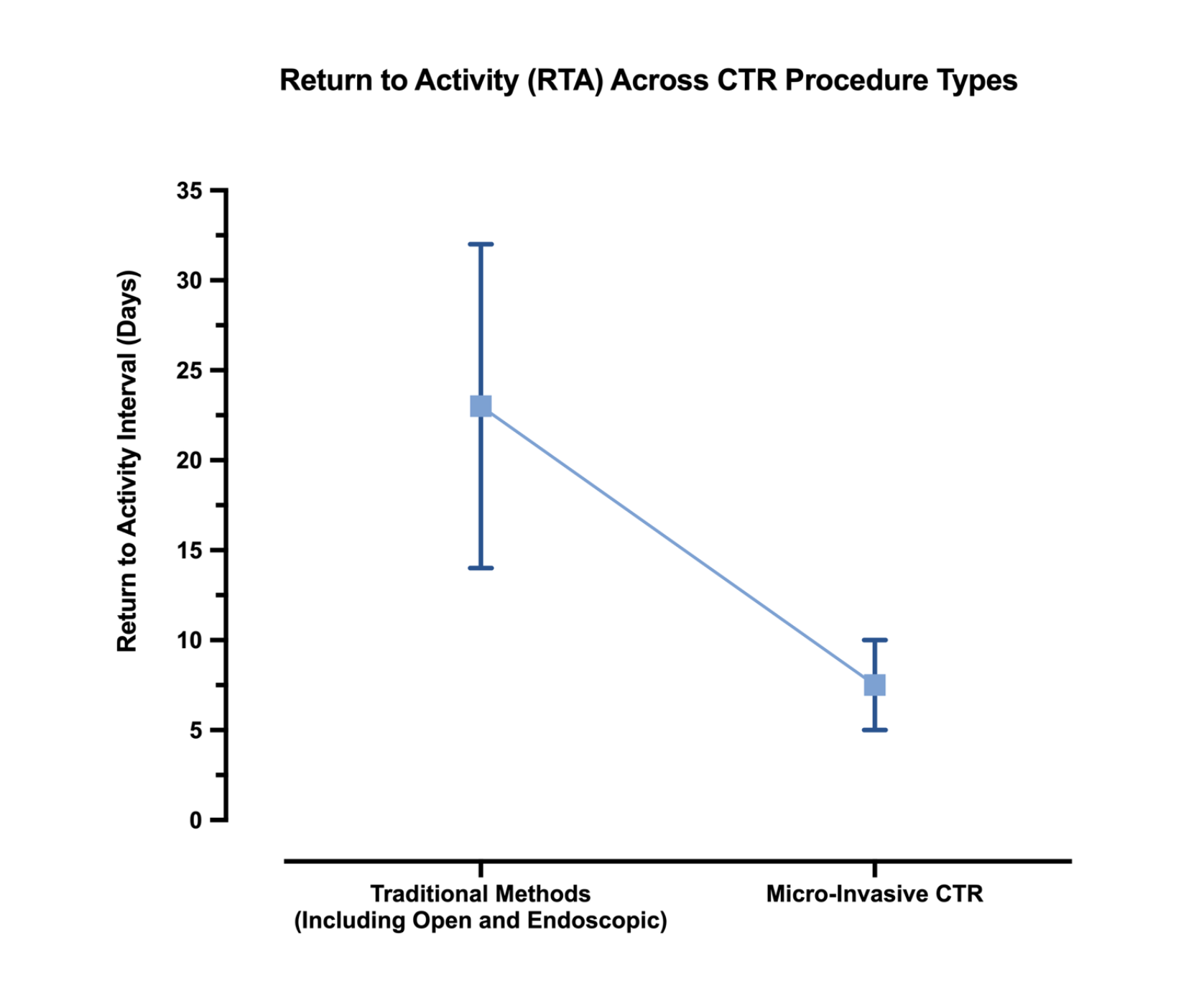
Micro-invasive carpal tunnel release may help patients return to activity sooner, with recovery ranges narrowing from 14-32 days for traditional methods, to 5-10 days with Micro-CTR.
On average, Micro-invasive carpal tunnel release shortened return to activity by about 15.5 days compared with traditional methods.
Not in Melbourne?
We offer initial tele-health consultations Australia-wide from the comfort of your own home.
The doctors at The Carpal Tunnel Institute offer advanced micro-invasive procedures in Melbourne and now also Geelong.
Each hand typically takes around 15 minutes, with precise ultrasound guidance used throughout for accuracy and confidence.
Request More Information
Lean more about our personalised Carpal Tunnel Treatment tailored by submitting the form below.
Our micro-invasive technique is scalpel-free and is a walk-in walk-out procedure.
Read more of our FAQs below:
-
Carpal tunnel syndrome affects approximately 3-6% of the adult population in Australia.
Certain occupational groups are more prone to this condition, especially those who engage in repetitive hand movements or use vibrating tools.
Women are also more likely to experience carpal tunnel syndrome, with higher prevalence rates observed during pregnancy and menopause.
-
In the early stages, carpal tunnel syndrome may cause compression, leading to discomfort, tingling, and altered sensations in the thumb, index finger, middle finger, and the side of the ring finger closest to the thumb.
As the condition progresses, patients often experience pain and pins-and-needles sensations during sleep, along with clumsiness and weakness in the fingers and thumb. If left untreated, the symptoms can worsen, potentially resulting in constant pain and weakness. In severe cases, prolonged compression can lead to permanent damage to the median nerve.
-
If you're unsure, feel free to call or book an appointment online for a consultation. During the consultation, we'll help diagnose your condition and provide guidance on the next steps for treatment.
-
Our micro-invasive procedure involves carefully releasing the transverse ligament in the carpal tunnel using a specialised tool, guided by advanced imaging technology.
This technique minimises damage to surrounding tissues and gently relieves the pressure on the median nerve, which causes the symptoms of carpal tunnel syndrome.
The procedure is stitch-free, performed as a walk-in walk-out day procedure, and does not require general anaesthesia.
-
Recovery time varies between individuals. Some patients are able to return to work as early as the following day, depending on the nature of their job.
Accessing Care & Locations
Our procedure rooms are located in Melbourne’s inner north and Geelong. For added convenience, initial and follow-up consultations can also be completed via tele-health, reducing the need for multiple visits.
Please see the maps below for addresses and directions.
Melbourne Clinic - Procedures and Consultations
277 Lygon Street Brunswick
Geelong Clinic - Procedures
49 Bellerine Street Geelong
The advantages of our procedure
-

No Stitches
-

Typically 15-Minutes per wrist
-

Advanced Image Guided Treatment
-

No Scarring
-

No Need For General Anaesthesia
-
Recovery Focused
Benefits of Micro-Invasive Treatment
Our micro-invasive carpal tunnel release procedure uses advanced image-guided techniques to minimise disruption to surrounding tissue. This approach aims to support a comfortable recovery and help you return to daily activities, with recovery outcomes tailored to your individual needs.
-
We offer treatment of symptoms of carpal tunnel syndrome, allowing you to experience improved hand function.
-
Our micro-invasive technique eliminates the need for general anaesthesia, reducing the associated risks and providing a safe experience.
-
Minimally invasive carpal tunnel release aims to reduce post procedure analgesia requirement. Paracetemol and nurofen may be required post-procedure.
-
Our micro-invasive approach is associated with only minimal disruption to the skin barrier, which is associated with a very low risk of infection.
-
Our precise and minimally invasive technique results in minimal scarring on the skin. This preserves the aesthetics of your hand and wrist and results in a rapid return to full function.
Carpal Tunnel Syndrome
Carpal tunnel syndrome affects around 3-6% of the adult population in Australia. It is more common in certain occupational groups, such as those who perform repetitive hand movements or work with vibrating tools. Additionally, it tends to be more prevalent among women, particularly during pregnancy and menopause.
Carpal Tunnel Syndrome arises as a nerve entrapment condition resulting from the compression of the median nerve at the wrist. This crucial nerve travels through a tight channel known as the carpal tunnel where the forearm meets the hand.
The compression often leads to discomfort, tingling, and altered sensations in the thumb, index finger, middle finger, and the side of the ring finger closest to the thumb.


The Carpal Tunnel Guide
Expert articles from our Doctors to support you through your treatment journey.