
Research & Outcomes
We are committed to continually improving the way carpal tunnel syndrome is diagnosed and treated. Our team actively contributes to research that evaluates the safety, effectiveness and long-term outcomes of minimally invasive carpal tunnel treatment.
By studying patient outcomes and refining ultrasound-guided techniques, we aim to help shape best practice, not only for our own patients, but for clinicians treating carpal tunnel syndrome around the world.
Research helps us ask important questions, challenge existing approaches and ensure that the techniques we use are supported by robust scientific evidence.
FEATURED RESEARCH
Early Recovery After Office-Based Ultrasound-Guided Micro-CTR
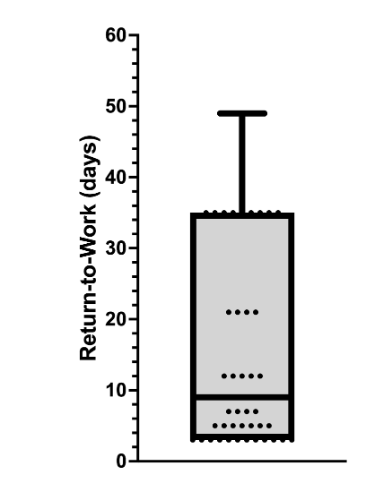
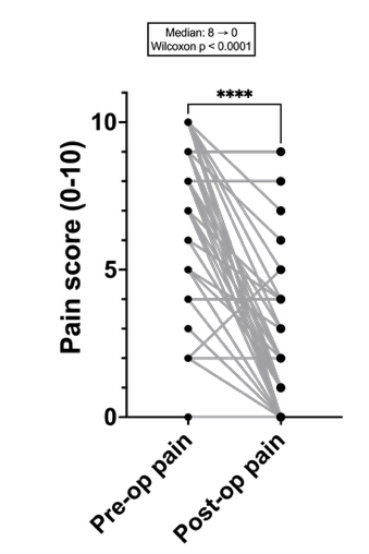
A prospective study of 67 patients undergoing office-based ultrasound-guided Micro-Invasive Carpal Tunnel Release (Micro-CTR) under local anaesthesia found rapid early functional recovery for most patients. Among those reporting return-to-work data, the median work was 9 days, while median return to driving was 5 days and household activities 7 days. Patient-reported pain also improved substantially, with the median pain score decreasing from 8/10 before treatment to 0/10 after the procedure.
RETURN TO WORK
Return to work after Micro-CTR: Among the 48 patients who reported return-to-work data, the median return was 9 days, with most returning in the first two weeks. Recovery varied between individuals.
PAIN
Pain improved substantially following Micro-CTR: Among 66 patients with paired pain scores, median patient-reported pain decreased from 8/10 before the procedure to 0/10 after treatment, representing a median 7-point improvement.
Results are from a prospective single-centred observational cohort. Outcomes were patient-reported, individual recovery varied, and the study did not directly compare Micro-CTR with other surgical techniques.
Lobos, C.A.; Wilcox, K.; Cottrell, A.; de Campos Silva, T.; Wilcox, S. Return-to-Work and Early Functional Recovery Following Office-Based Ultrasound-Guided Microinvasive Carpal Tunnel Release: A Prospective Cohort Study. Medicina (B Aires) 2026, 62, 1441, doi:10.3390/medicina62081441.
FEATURED RESEARCH
Return-to-Work After Carpal Tunnel Release Across Surgical Techniques: A Narrative Review
One of our recent publications examined how recovery times compare across the full spectrum of carpal tunnel release techniques, from traditional open surgery through to endoscopic, ultrasound-guided, and microinvasive approaches.
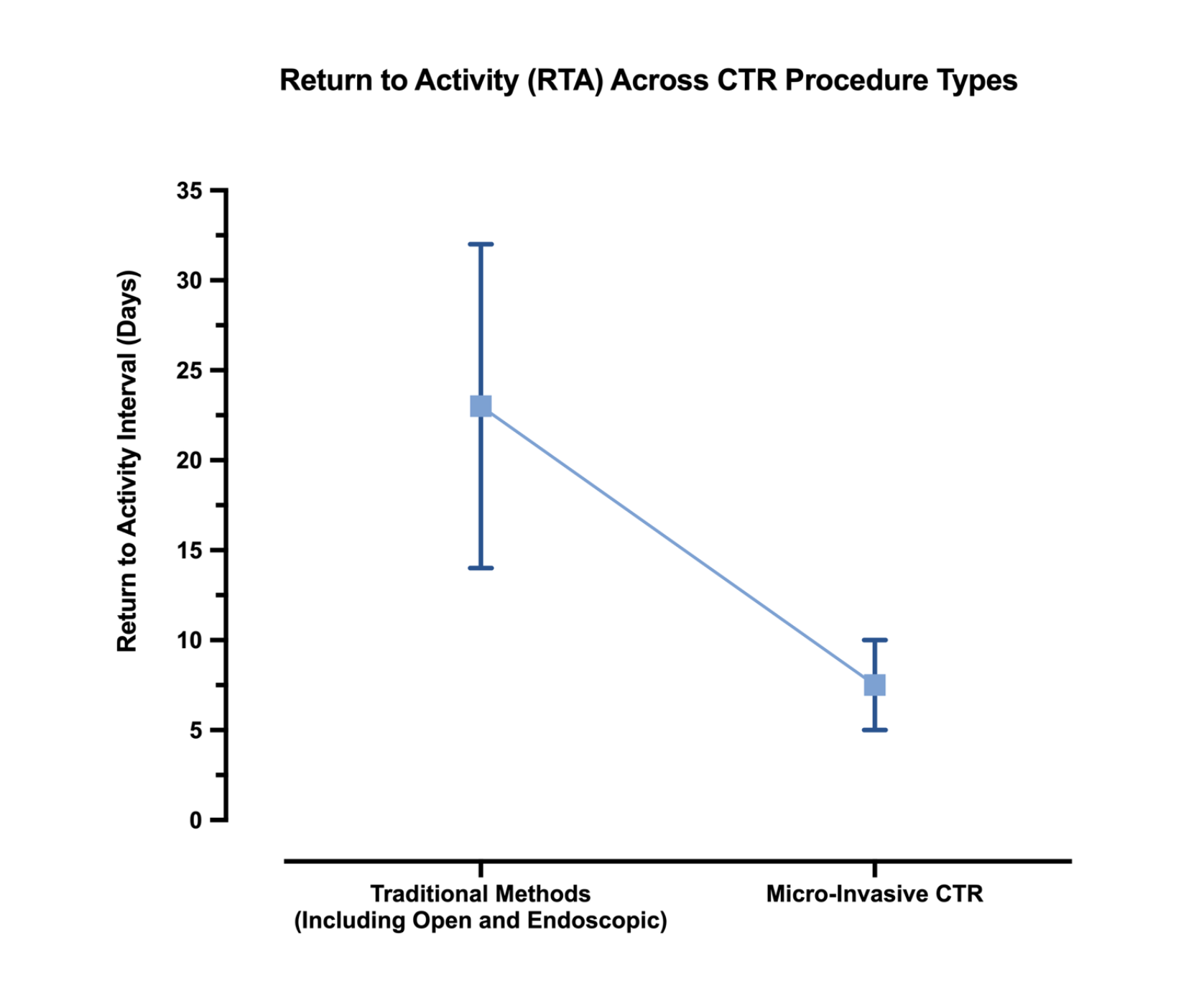
The review found that return-to-activity intervals shortened progressively as procedural invasiveness decreased. Open surgery was associated with recovery durations of four to six weeks, while ultrasound-guided techniques reduced this to approximately ten to twenty-one days. The most recent microinvasive approaches, including the needle-mounted blade system, were associated with return-to-activity within five to ten days, without compromising symptom relief or long-term outcomes.
These findings reinforce our commitment to offering approaches that prioritise not just clinical effectiveness, but practical recovery for patients with work and daily life to return to.
Source: Lobos CA, Wilcox K, Silva TDC, Wilcox S. Return-to-Work After Carpal Tunnel Release Across Surgical Techniques: A Narrative Review. Medicina. 2026;62(3):557. doi:10.3390/medicina62030557.
As our research program continues to grow, we remain committed to generating high-quality evidence that supports safer procedures, recovery and better outcomes for people living with carpal tunnel syndrome.